
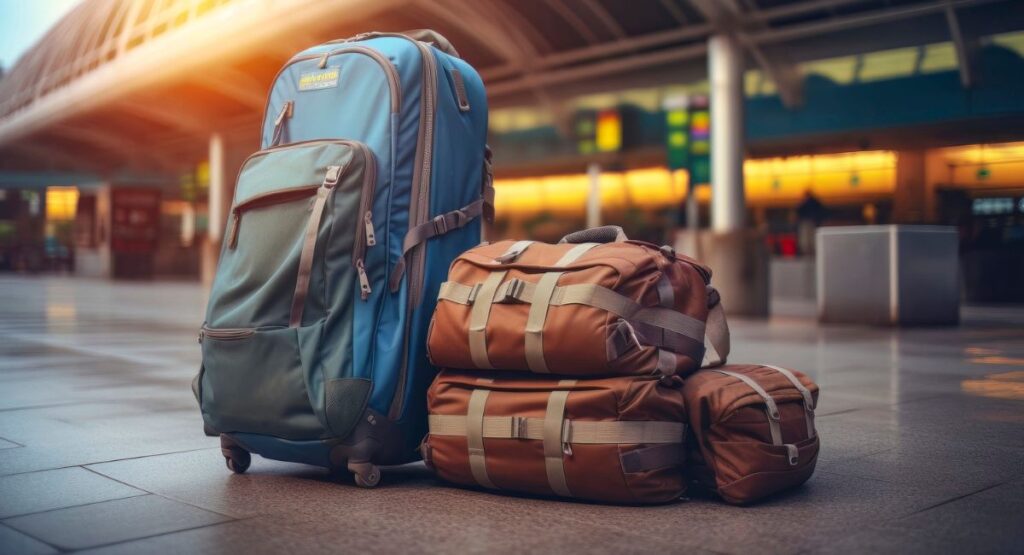
The price on your airline ticket is increasingly just the beginning. In 2025, U.S. passenger airlines collected $7.4 billion in baggage fees, according to the Bureau of Transportation Statistics (BTS). That works out to more than $20 million a day from travelers’ bags.
That number deserves more attention than it gets. Baggage fees are often presented as a small, optional charge. But a family checking luggage on a round-trip flight can easily spend hundreds of dollars beyond the advertised airfare.
And with several major airlines raising their fees again in 2026, this is not an expense I expect travelers to escape anytime soon.
Baggage Fees Have Become a $7 Billion Business
The federal figures cover 25 scheduled U.S. passenger airlines. Baggage charges accounted for 2.9% of their combined $252.6 billion in operating revenue in 2025.
Here’s how the total has changed over the last three years:
| Year | Baggage-fee revenue |
|---|---|
| 2023 | $7.1 billion |
| 2024 | $7.3 billion |
| 2025 | $7.4 billion |
The increases may look modest, but notice what has not happened: fees have not retreated from their elevated levels. Airlines collected roughly $300 million more in 2025 than in 2023, based on these rounded figures.
Most of the money came from domestic operations. Those generated approximately $6 billion in baggage-fee revenue during 2025, compared with $1.4 billion from international operations.
There is an important accounting distinction here. $7.4 billion is revenue, not profit. Airlines incur expenses to handle luggage, and the BTS data does not tell us how much profit baggage fees alone produced.
Still, the scale is striking. The same airlines reported $6 billion in total after-tax net profit in 2025. That does not mean baggage fees were pure profit. It tells us just how large this revenue stream has become.
The video below takes a closer look at how U.S. airlines collected $7.4 billion in baggage fees in 2025 and why this revenue stream has become such a significant part of the airline business.
What One Checked Bag Costs in 2026
The industrywide revenue number is huge, but the household math is what probably should bother you more.
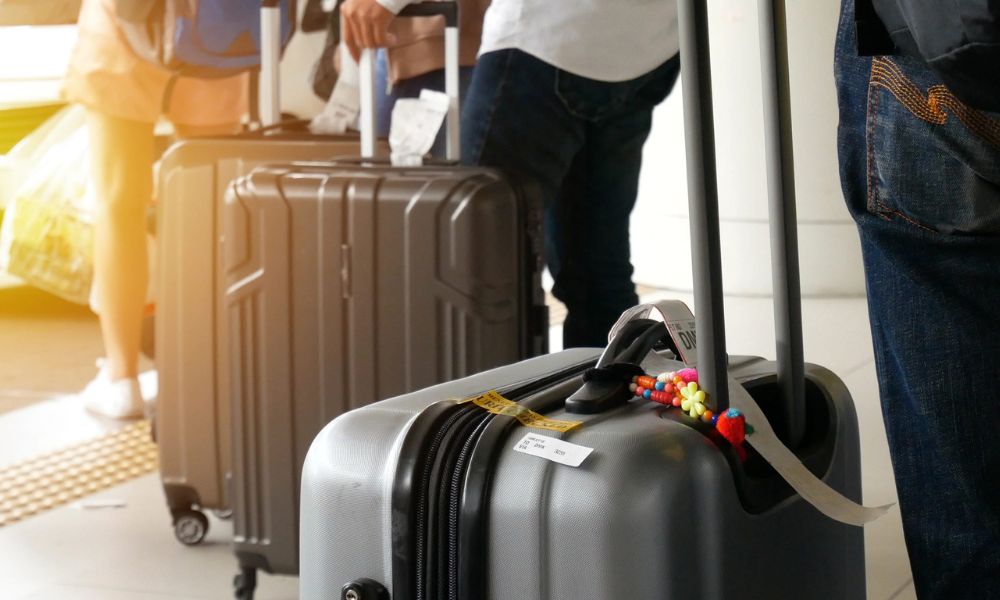
As of October 2026, several major airlines charge around $45 for a first standard checked bag each way on many domestic economy tickets, provided the passenger does not qualify for a waiver.
For example:
- Delta: $45 for the first standard checked bag and $55 for the second, each way, on typical domestic Main fares.
- Southwest: $45 for the first bag and $55 for the second on Basic, Choice, and Choice Preferred fares booked or changed on or after April 9, 2026.
- American: On domestic Main Cabin bookings, $45 for the first bag when prepaid online, or $50 at the airport. The second costs $55 prepaid or $60 at the airport.
Actual charges depend on your route, ticket purchase date, fare, and benefits. Basic Economy, international trips, and oversized luggage can change the bill.
Consider a family of four checking one suitcase per person, each way, at $45 per bag.
| Luggage checked | Round-trip baggage cost |
|---|---|
| 1 bag total | $90 |
| 2 bags total | $180 |
| 4 bags total | $360 |
This is why a $45 fee should never be dismissed as insignificant. The bill is charged per bag and per direction, not once for the entire vacation.
A Cheap Ticket Is Not Necessarily a Cheap Flight
There’s a reason baggage fees create so much frustration: people naturally compare the fares they see first.
A $220 ticket looks better than a $260 ticket. But if the first airline charges $90 to check a suitcase round-trip and the second includes it, the supposedly cheaper option actually costs $310.
Travelers should compare the all-in price before booking rather than base their decision on the first number displayed by a search engine.
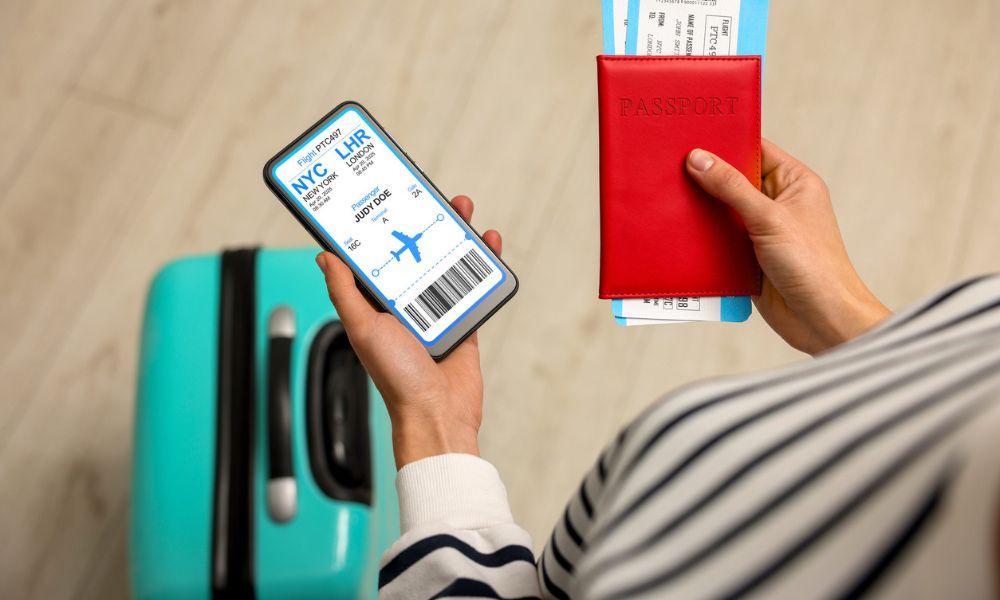
The federal government’s own airfare statistics reinforce the distinction. BTS put the average domestic itinerary fare at $387 in 2025, but its fare measure excludes optional charges such as baggage fees.
That means an average airfare figure is not necessarily an average travel bill.
The problem becomes especially obvious when an entire family flies. In our earlier look at Thanksgiving airfare for a family of four, we focused on how quickly multiple tickets strain a household budget. Checked baggage can widen that gap further.
Southwest’s Change Shows Where the Industry Is Going
For years, Southwest’s two-free-checked-bags policy gave travelers a straightforward way to avoid this expense. That long-standing policy ended for most new bookings in May 2025.
And after another increase in April 2026, many Southwest passengers now face $45 for the first checked bag and $55 for the second, each way.
There are exceptions. Eligible loyalty members, credit-card holders, premium-fare customers, and certain other travelers can receive free bags. But travelers can no longer assume that choosing Southwest automatically eliminates baggage fees.
This seems to be a broader shift in airline pricing. Services that passengers once associated with the ticket are increasingly separated into different charges. Airlines can offer a lower entry-level fare while collecting additional money from customers who need more.
That model gives travelers choices, but it also makes comparison shopping harder.
How to Keep More of Your Travel Budget
The answer is not to stop checking bags at any cost.
Traveling with children or winter clothing can make that unrealistic.
The goal is to avoid paying more than you need to.
Here’s what you should check before buying a ticket:
- Price luggage before choosing the flight. Add baggage costs for both directions, for everyone traveling, to the fare shown on the booking page.
- Compare fares that include a bag. A higher ticket price may be cheaper overall if it covers the luggage you actually need.
- Use free-bag benefits deliberately. Airline status, certain fare classes, and eligible airline credit cards can waive charges. But check any credit card’s annual fee against your realistic savings.
- Prepay where it is cheaper. American, for instance, lists a $5 difference between online and airport payment for some standard checked bags.
- Check weight and size limits. Avoiding an overweight or oversized charge can matter as much as finding a cheaper base fee.
You should also consider whether a carry-on and personal item are sufficient for a short trip, while checking the airline’s specific allowance. Some basic fares restrict what you can bring aboard.
The Real Cost Is Bigger Than the Ticket
The $7.4 billion baggage-fee total tells us something simple: this is no longer a minor corner of the airline business.
Airlines have every reason to keep selling optional services, and travelers have every reason to scrutinize them. Checked-bag charges are unlikely to disappear simply because customers dislike them.
For your next flight, our advice is to treat the baggage allowance as part of the ticket price from the start. The cheapest airfare is not always the cheapest journey, and a suitcase should not become a budgeting surprise at the airport.