

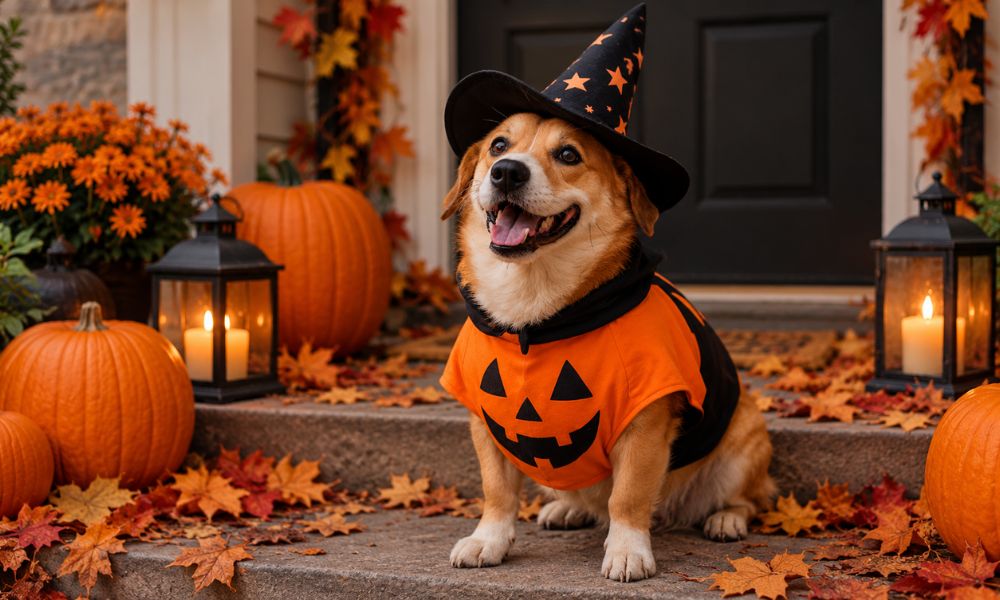
Americans are expected to spend $920 million on Halloween costumes for their pets in 2026. We knew pet costumes had become a real retail category, but nearly a billion dollars is a number that really makes us look twice.
The National Retail Federation expects total Halloween spending to reach $13.5 billion this year, with $4.4 billion going to costumes. Pet costumes alone account for roughly 21% of all costume spending, according to the NRF Halloween survey.
That is the most interesting number.
We are spending about one Halloween costume dollar out of every five dressing dogs, cats, and other pets. Children’s costumes are expected to generate $1.5 billion in spending, while adult costumes account for about $2 billion.
Pet costumes are now large enough to sit comfortably beside both categories rather than being treated as a novelty on the edge of the Halloween business.
And the category is still growing.
Pet Costume Spending Has Jumped Sharply
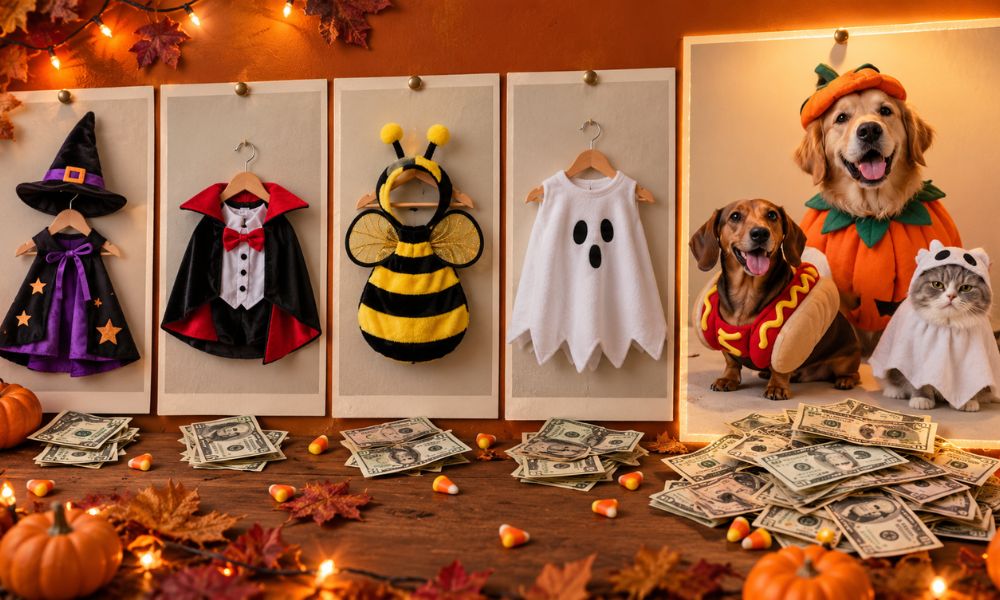
The $920 million projection is up from $860 million in 2025. That works out to an increase of almost 7% in a single year. Total Halloween spending, by comparison, is expected to rise from $13.1 billion to $13.5 billion, an increase of roughly 3%.
In other words, pet costume spending is growing more than twice as quickly as Halloween spending overall.
The longer view makes the change even clearer.
| Year | Projected U.S. pet costume spending |
|---|---|
| 2022 | $710 million |
| 2023 | $700 million |
| 2024 | $700 million |
| 2025 | $860 million |
| 2026 | $920 million |
From 2024 to 2026, the category has grown by about 31%.
What stands out is that Americans did not suddenly discover pet costumes. People have been putting dogs in pumpkin outfits for years. The more important change is how much money the category now attracts.
Halloween spending has expanded, pets have moved further into family life, and retailers have become much better at selling products around that relationship.
A dog wearing a taco costume may still look ridiculous. Financially, the category is becoming quite serious.
One in Five Halloween Costume Dollars Now Goes to Pets
Where the $4.4 Billion in Halloween Costume Spending Goes
Projected U.S. costume spending in 2026
Source: National Retail Federation, Halloween Survey 2026
Total costume spending for Halloween is projected at $4.4 billion this year. Adults account for roughly $2 billion and children for another $1.5 billion. Pets take $920 million.
Put another way, Americans are expected to spend about 61 cents on pet costumes for every $1 spent on children’s costumes.
That comparison is much more useful than the $920 million figure by itself.
Nobody would describe children’s Halloween costumes as a tiny niche. Pet costume spending has now reached more than half the size of that market.
It also shows how household spending changes when pets become participants in holidays rather than simply animals living in the household. Once the dog is included in Christmas photos, birthday celebrations, vacations, and Halloween, an entirely new group of purchases becomes normal.
The costume itself is usually a small transaction. Multiply millions of those small transactions across the country, and suddenly the pumpkin hats add up to nearly $1 billion.
There Are a Lot of Households Available to Buy Them
America’s pet population provides retailers with an enormous customer base.
The American Pet Products Association reports that 95 million U.S. households owned at least one pet in 2025. Total pet industry spending reached $158 billion that year, and APPA projects the market will reach $165 billion in 2026, according to its state of the industry data.
Spread $920 million evenly across 95 million pet-owning households, and it comes to about $9.68 per household.
Of course, that isn’t how the money is actually distributed.
Plenty of households will spend nothing on Halloween clothing for their animals. Others will buy costumes for multiple pets, replace an old costume, or spend substantially more than $10.
That simple calculation is still useful because it changes the scale of the headline. Nearly $1 billion sounds enormous nationally. At the household level, the industry can reach that figure through millions of relatively small purchases.
That is how a lot of consumer spending works. We see a billion-dollar category and imagine people making large purchases. In reality, the number can be built $15, $20 or $30 at a time.
The Pumpkin Remains Surprisingly Powerful
Americans are not exactly reinventing pet fashion this Halloween.
Among people planning pet costumes, the most popular choice is a pumpkin, selected by 11.6%. A hot dog comes next at 5.9%, followed by a ghost at 2.8%.
This part of the data shows that the growth in spending does not require increasingly elaborate ideas.
Classic costumes still work. The appeal is easy to understand. A recognizable costume produces the photo, joke, or family moment people are buying in the first place. Nobody needs an explanation when a dachshund turns up dressed as a hot dog.
That also tells us something about what the customer is really paying for.
A pet costume has almost no practical value. The dog does not need it. The cat has probably filed a formal objection. The value comes from entertainment, photographs, social sharing, and including the animal in a family tradition.
Economically, that makes pet costumes a very clean example of discretionary spending.
Americans Are Spending More While Looking Harder for Deals
The larger Halloween numbers contain an interesting tension.
NRF expects Americans celebrating Halloween to spend an average of $115.14 per person this year, almost unchanged from $114.45 in 2025.
That figure looks different when spending is measured at the household level.
A separate Deloitte survey estimates that the average American household will spend $285 on Halloween in 2026, including costumes, decorations, activities, and dining.
At the same time, consumers are paying close attention to price. If Halloween products cost more than expected, 31% say they will comparison shop, 26% will search for coupons or sales, and 34% will look for products they can reuse or repurpose.
That is rather important when looking at pet spending.
Households are not blindly throwing money at Halloween. They are actively trying to control what the holiday costs them. Yet projected spending on pet costumes is still climbing from $860 million to $920 million.
That suggests pet costumes occupy an interesting place in the household budget. They are unnecessary, but individually they can feel inexpensive enough to survive a broader effort to cut costs.
A family might skip a large decoration, reuse last year’s outdoor display and comparison shop for candy while still spending a relatively small amount to put the dog in a costume.
Small purchases are very good at escaping the scrutiny we give larger ones.
Halloween Itself Has Become a Longer Shopping Season
Another reason spending has room to grow is that Halloween is no longer confined to the last few days of October.
NRF says 49% of consumers began Halloween shopping in September or earlier in 2026. Back in 2024, 47% were shopping before October, compared with 32% a decade earlier. The organization’s broader Halloween spending data shows how much earlier the shopping season has moved.
That extra time is important for retailers.
A holiday that used to generate a short burst of candy and costume purchases has become several weeks of decorations, themed products, social events, and impulse purchases.
Pets fit neatly into that expanded season.
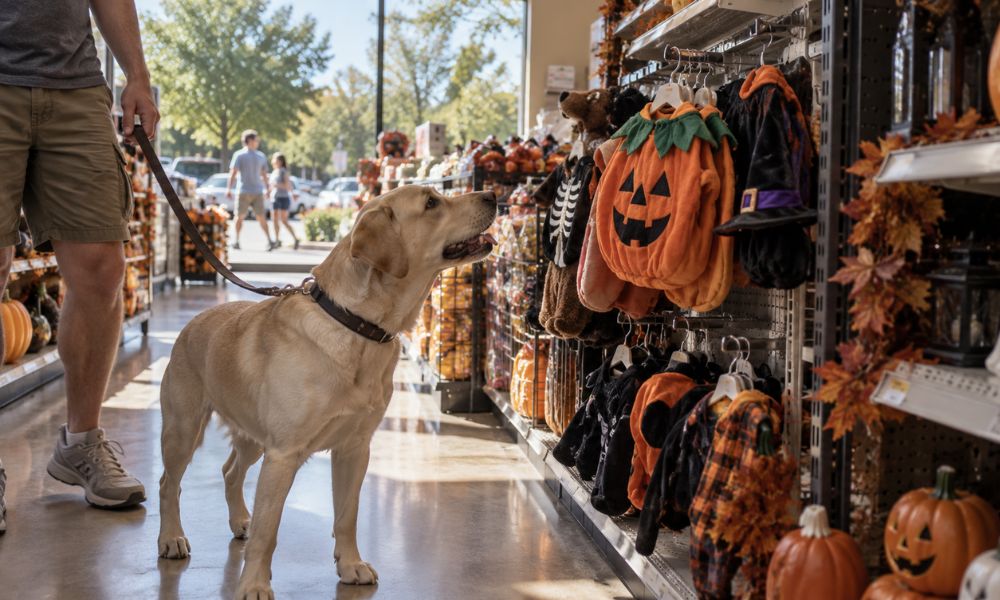
Someone who walks past Halloween merchandise six times between September and October has six opportunities to decide that their Labrador would look excellent as a pumpkin.
Unfortunately for the Labrador, retailers understand this.
Pet Spending Is Increasingly About Lifestyle
The broader pet industry helps explain why $920 million no longer looks as strange as it once would have.
Americans spent $158 billion across the pet industry in 2025. That includes necessities such as food and veterinary care, along with toys, accessories, services and other purchases. Industry projections put total spending at $165 billion in 2026.
Pet costumes represent well under 1% of that enormous market.
That is a useful perspective. Americans are not diverting a massive share of their pet budgets into Halloween clothing. Yet $920 million devoted to something completely optional shows how far the commercial relationship with pets now extends beyond basic care.
Food keeps the dog fed. Veterinary care keeps it healthy. A Halloween costume does something for the owner.
It turns the pet into another participant in the household’s social life, which is exactly why retailers can sell products around birthdays, holidays, travel, clothing, and home décor that barely existed as meaningful pet categories several decades ago.
The $920 Million Says More Than It Seems
View this post on Instagram
It would be easy to treat this as one of those amusing consumer statistics that appear every October: Americans are spending nearly $1 billion putting costumes on their pets. The number tells us more than that.
Pet costume spending has risen about 31% in two years. It now represents roughly one-fifth of all Halloween costume spending. The category is approaching two-thirds of what Americans spend on children’s costumes, while the broader pet economy has grown into a market worth more than $150 billion a year.
What you should remember is not that pumpkins and hot dogs remain popular costume choices.
It is how easily a completely discretionary pet purchase has become part of an ordinary holiday budget.
Once nearly $1 billion of annual spending can sit behind something as unnecessary as dressing a dog for Halloween, it becomes clear how deeply pets have moved into the financial life of American households.